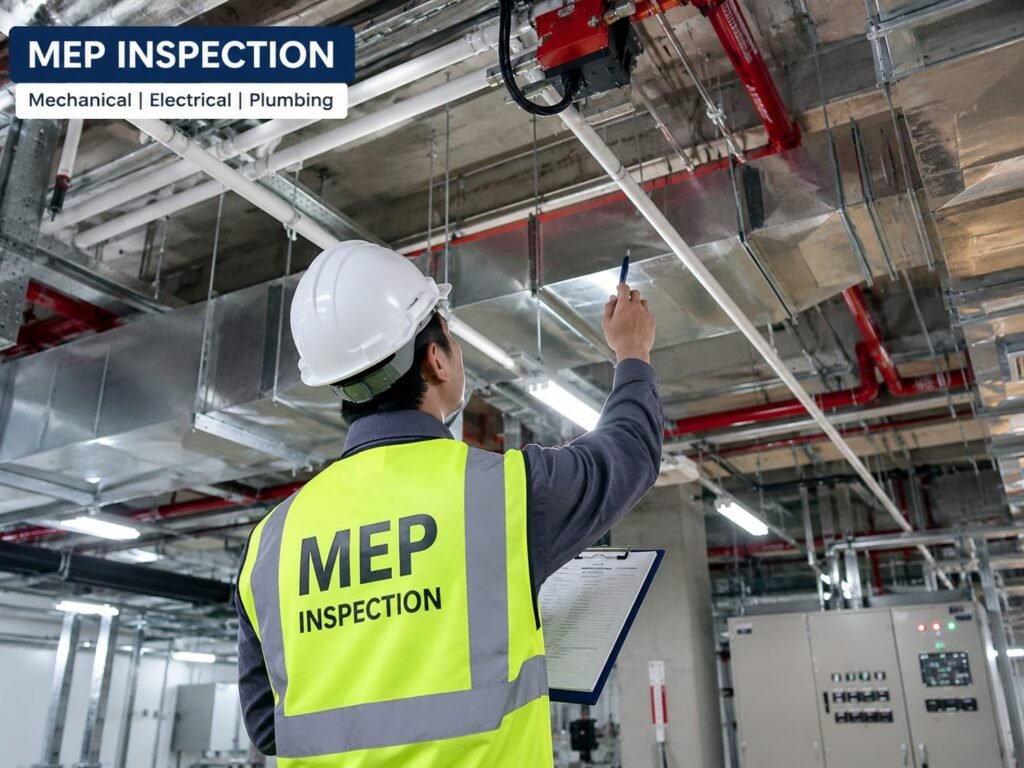
A building’s quality extends far beyond its walls, floors, and finishes. Behind every comfortable, safe, and functional property is a complex network of Mechanical, Electrical, and Plumbing (MEP) systems working together to support everyday living.
Whether you’re purchasing a newly built home, managing a commercial property, or overseeing a construction project, an MEP inspection is an essential step in ensuring these critical systems are installed correctly and perform as intended
What Is an MEP Inspection?
An MEP inspection is a comprehensive assessment of a building’s mechanical, electrical, and plumbing systems. Conducted by qualified engineers, the inspection verifies that each system has been installed according to industry standards, building regulations, and design specifications.
The goal is to identify defects, safety concerns, installation errors, or performance issues before they lead to costly repairs, operational disruptions, or potential hazards.
Why Are MEP Inspections Important?
While cosmetic finishes are easy to notice, many of the most critical components of a building remain hidden behind walls, ceilings, and service areas. Faults in these systems may not become apparent until weeks or months after occupancy.
A professional MEP inspection helps to:
- Ensure building systems operate safely and efficiently.
- Detect installation defects before handover.
- Improve energy efficiency and system performance.
- Reduce future maintenance and repair costs.
- Verify compliance with local building codes and industry standards.
- Protect the long-term value of the property.
Early identification of issues allows developers, contractors, or property owners to resolve them before they become major problems.
What Does an MEP Inspection Cover?
Mechanical Systems
Mechanical systems are responsible for maintaining indoor comfort and air quality. Engineers inspect components such as:
- Heating, Ventilation, and Air Conditioning (HVAC) systems
- Air ducts and ventilation
- Air handling units
- Exhaust systems
- Refrigeration equipment
- Mechanical plant installations
During the inspection, engineers check for proper installation, airflow, equipment performance, vibration, noise levels, and overall system functionality.
Electrical Systems
Electrical inspections focus on the safety, reliability, and performance of the property’s power distribution systems.
Inspections typically include:
- Distribution boards
- Circuit breakers
- Electrical wiring
- Power outlets and switches
- Lighting systems
- Emergency lighting
- Earthing and grounding
- Electrical panels
Qualified engineers verify that installations comply with safety standards and identify issues such as overloaded circuits, poor workmanship, or improper connections.
Plumbing Systems
Plumbing inspections ensure the property’s water supply and drainage systems function efficiently without leaks or blockages.
Areas inspected include:
- Water supply pipes
- Drainage systems
- Water pressure
- Valves and fittings
- Bathrooms and kitchens
- Water heaters
- Pumps
- Sanitary installations
Engineers assess the overall condition of the plumbing network and identify any defects that could lead to water damage or operational issues.
Common Issues Found During MEP Inspections
Even newly completed properties can have hidden defects within their building services. Some of the most common issues include:
- Water leaks from concealed pipework
- Poor HVAC airflow or unbalanced systems
- Incorrect electrical wiring
- Loose electrical connections
- Faulty switches or sockets
- Blocked drainage lines
- Missing insulation on pipes
- Improper equipment installation
- Excessive vibration in mechanical systems
- Inadequate waterproofing around service penetrations
Identifying these problems early helps prevent costly repairs and ensures systems operate efficiently from day one.
Who Needs an MEP Inspection?
MEP inspections provide valuable insights for a wide range of property owners and stakeholders, including:
- Homeowners purchasing newly built properties
- Property investors
- Real estate developers
- Contractors
- Facility managers
- Commercial property owners
- Building consultants
Whether the property is residential, commercial, or industrial, ensuring the integrity of its building services is essential for long-term performance.
Final Thoughts
Mechanical, electrical, and plumbing systems form the backbone of every modern building. While they often remain out of sight, their performance has a direct impact on comfort, safety, and operational efficiency.
A professional MEP inspection provides the assurance that these essential systems have been installed correctly, function reliably, and meet the required quality standards. Whether you’re preparing for handover or managing an existing property, investing in an MEP inspection is a proactive step toward protecting your investment and ensuring your building performs at its best for years to come.
This blog is suitable for construction, engineering, property inspection, and snagging companies. It is written in an authoritative yet accessible tone and naturally incorporates SEO keywords such as MEP inspection, mechanical electrical plumbing inspection, building services inspection, HVAC inspection, and property handover inspection.
Need waterproofing help in Dubai?
Book a free, no-obligation inspection with our specialists.
Get Free Inspection